
Write invoices in English
English-language invoices are widely accepted across North America, the UK, Ireland, and many international companies.
Cakedesk lets you issue invoices in English with standard wording and structure so finance teams can process them quickly.
Option 1: Create invoices in English with Cakedesk
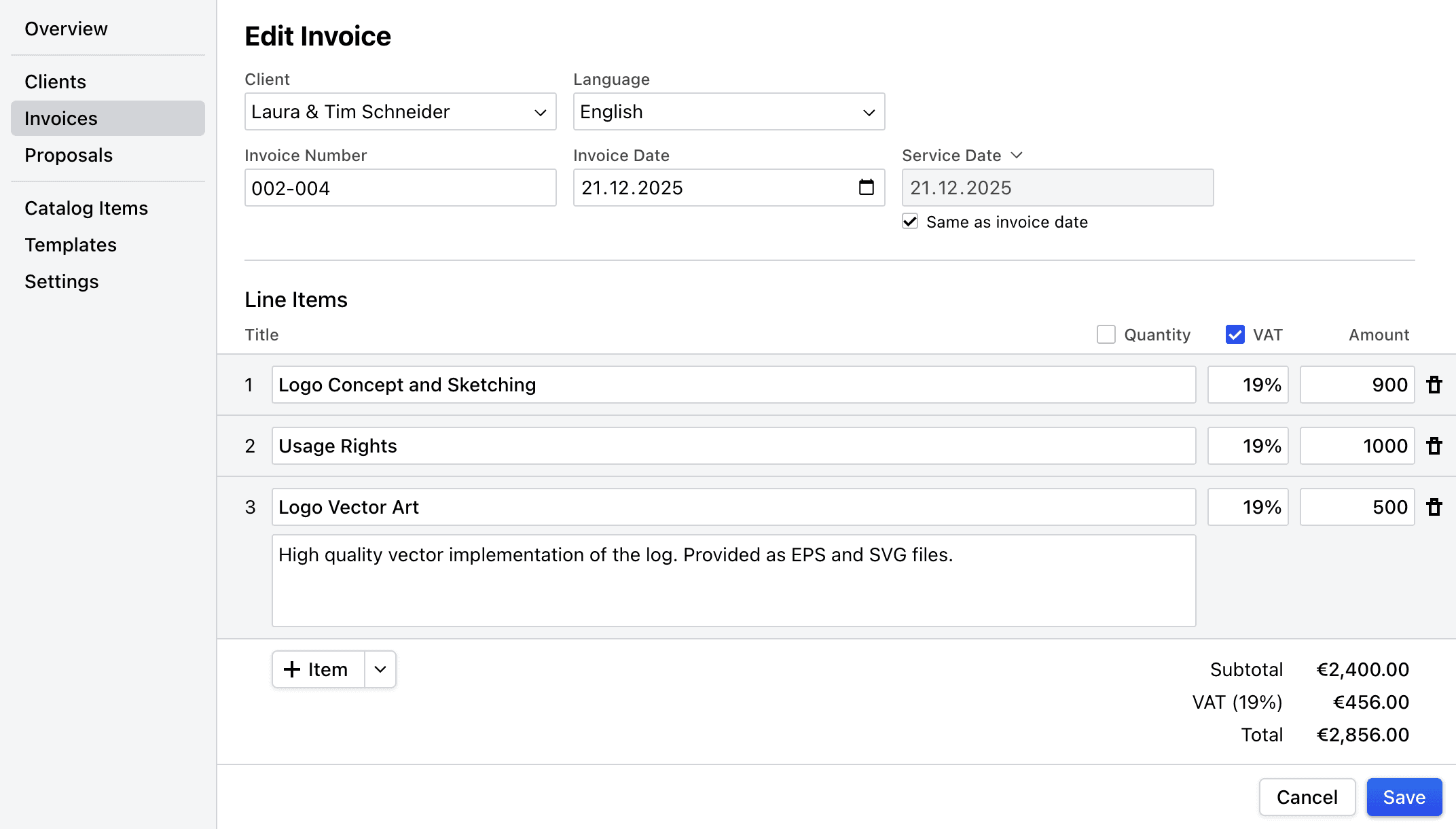
Cakedesk is a simple invoicing app for Windows and Mac that lets you write invoices in English using correct wording, familiar structure, and local formatting, without having to translate or adapt documents manually.
- Supports English and many other languages
- All data stored privately on your computer
- 3 invoices for free
- No subscription or recurring costs
Option 2: Create invoices in English in your browser
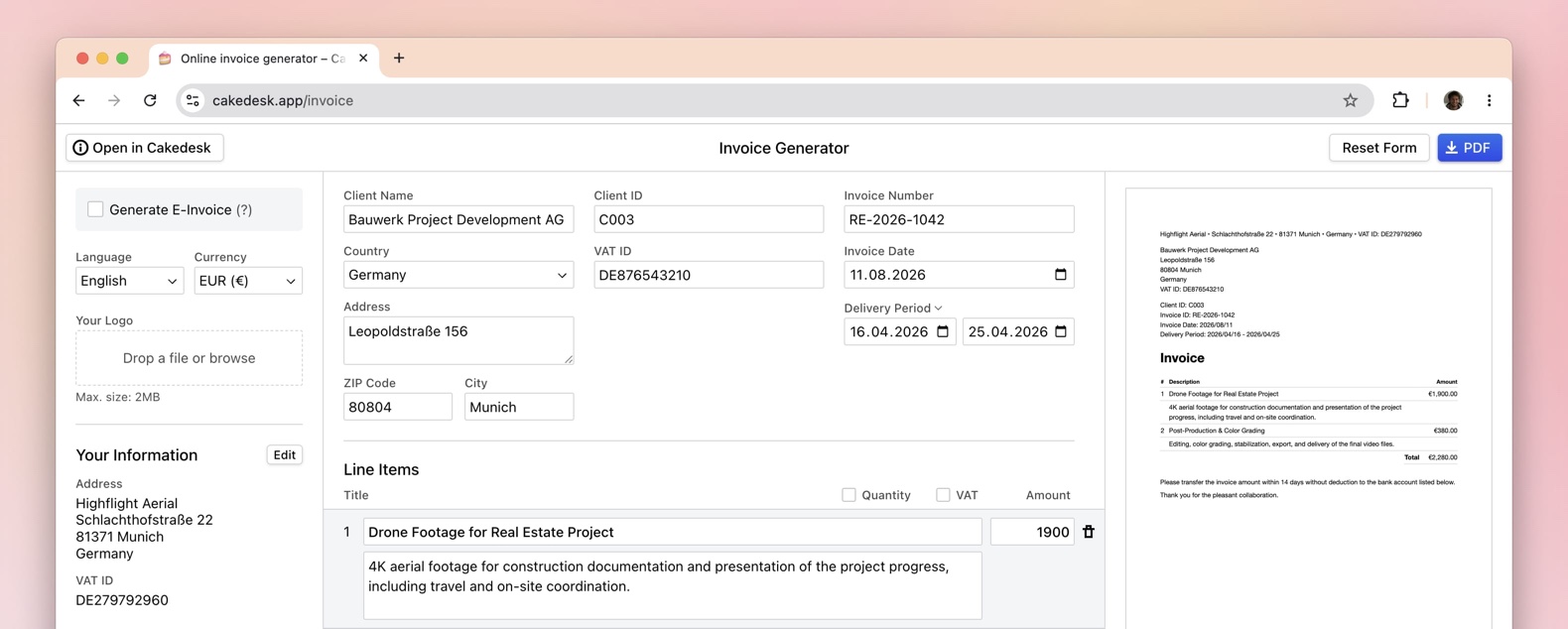
With Cakedesk's free online invoice generator, you can create an invoice in English directly in your browser without signing up. Simply select English as the invoice language, enter your details, and download the finished invoice.
#Who typically accepts English invoices?
English invoices are common in:
- US, UK, Ireland, Canada, Australia, New Zealand
- Multinational companies with English accounting
- Tech companies and agencies that operate globally
#Common invoice terminology in English
- Invoice → Invoice
- Invoice number → Invoice No.
- Invoice date → Invoice date
- Due date → Due date
- Subtotal → Subtotal
- Tax (VAT/GST/Sales tax) → Tax
- Total amount due → Total due
#Formatting conventions in English invoices
- Date format: MM/DD/YYYY (US) or DD/MM/YYYY (UK)
- Decimal separator: dot
- Thousands separator: comma
- Currency: symbol before the amount (e.g., $1,200.00 or £1,200.00)
- Paper size: Letter (US) or A4 (UK/International)
#Structure of a typical English invoice
- Clear "Invoice" label and unique invoice number
- Invoice date and due date
- Line items with quantities, rates, and amounts
- Tax shown separately when applicable
- Total amount due and payment terms
#Example invoice wording in English
- Invoice No. 2025-014
- Invoice date: 03/12/2025
- Due date: 03/26/2025
- Total due: $1,200.00
- Payment due within 14 days
#Writing English invoices with Cakedesk
Cakedesk helps you:
- Use English invoice templates with the right fields
- Apply the correct currency and separators
- Show tax separately or zero-rated as needed
- Generate PDFs that feel familiar to English-speaking clients
Create invoices that read naturally for English-speaking customers without extra formatting work.