
Invoice in EUR (Euro)
The euro (EUR) is the most widely used currency for invoicing within the European Union and one of the most common currencies for cross-border business worldwide.
If you work with clients in Europe or bill internationally from the EU, issuing invoices in EUR helps reduce friction, avoids confusion, and aligns with local accounting expectations.
Option 1: Create invoices in EUR with Cakedesk
Cakedesk is a simple invoicing app for Windows and Mac. Choose EUR as the document currency, select the language your client expects, and create a professional invoice without adjusting symbols and formats by hand.
- Create invoices and proposals in EUR
- 3 invoices for free
- Keep your invoicing data locally on your computer
- No subscription, no recurring costs
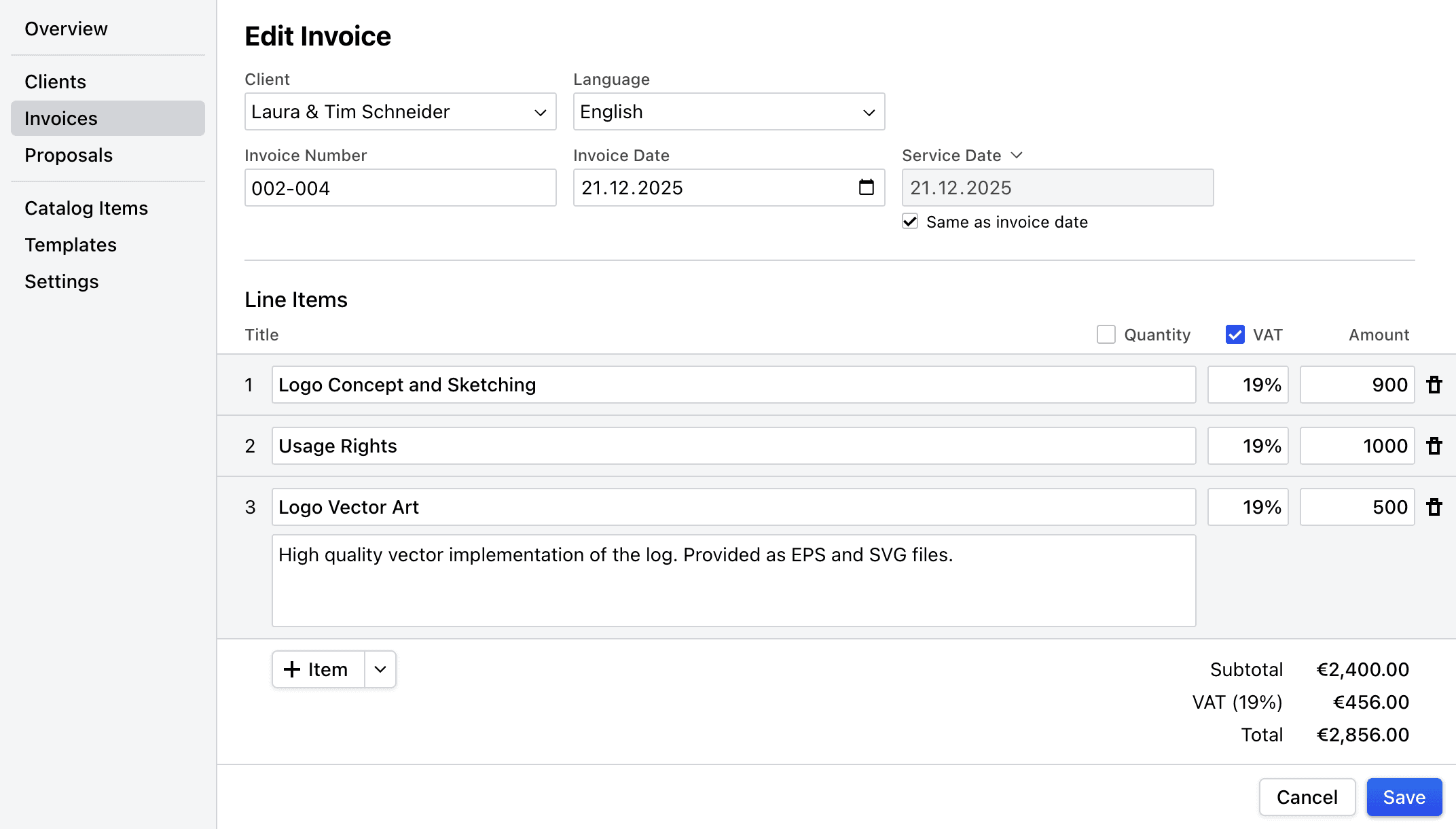
Option 2: Create EUR invoice in your browser
If you only need one invoice in EUR, use Cakedesk's free online invoice generator. It works without an account: select EUR, enter the invoice details, and download the finished PDF.
#A brief history of the euro
The euro was introduced in 1999 as part of a monetary union within the European Union, with the goal of simplifying trade and financial cooperation between member states.
At first, the euro existed only as a “virtual” currency used for accounting and electronic payments. Physical euro banknotes and coins entered circulation in 2002, replacing national currencies such as the German Mark, French Franc, and Italian Lira.
Since then, the euro has become one of the world's most important currencies. Today, it is used by hundreds of millions of people and widely accepted for international contracts and cross-border invoicing, both within and outside the EU.
#Where EUR is typically used
EUR is the official currency in most EU member states, including:
- Germany
- France
- Spain
- Netherlands
- Belgium
- Austria
- Finland
- Italy
- Portugal
It is also frequently used for:
- Cross-border invoicing within the EU
- International contracts where both parties prefer a neutral currency
- Consulting, agency, and software services billed across countries
Even outside the eurozone, many clients are comfortable receiving invoices in EUR.
#Who typically accepts invoices in EUR?
Invoices in EUR are commonly accepted by:
- Small and mid-sized businesses across the EU
- Corporations operating in multiple European countries
- Accounting departments that handle cross-border EU payments
- International clients working with EU-based freelancers or agencies
For US- or UK-based businesses working with European partners, EUR invoices are often preferred to avoid currency conversion on the client side.
#When should you invoice in EUR?
Invoicing in EUR is usually the right choice when:
- Both you and your client are based in the EU
- You work with multiple EU countries and want a single currency
- Your pricing is defined in EUR
- Your client's accounting is euro-based
You may also choose EUR when working internationally, as it is widely understood and stable.