
Invoice in DKK (Danish Krone)
The Danish krone (DKK) is used throughout Denmark and Greenland and is pegged closely to the euro through ERM II.
If you work with Danish companies or public institutions, invoicing in DKK avoids confusion and keeps totals aligned with local accounting.
Option 1: Create invoices in DKK with Cakedesk
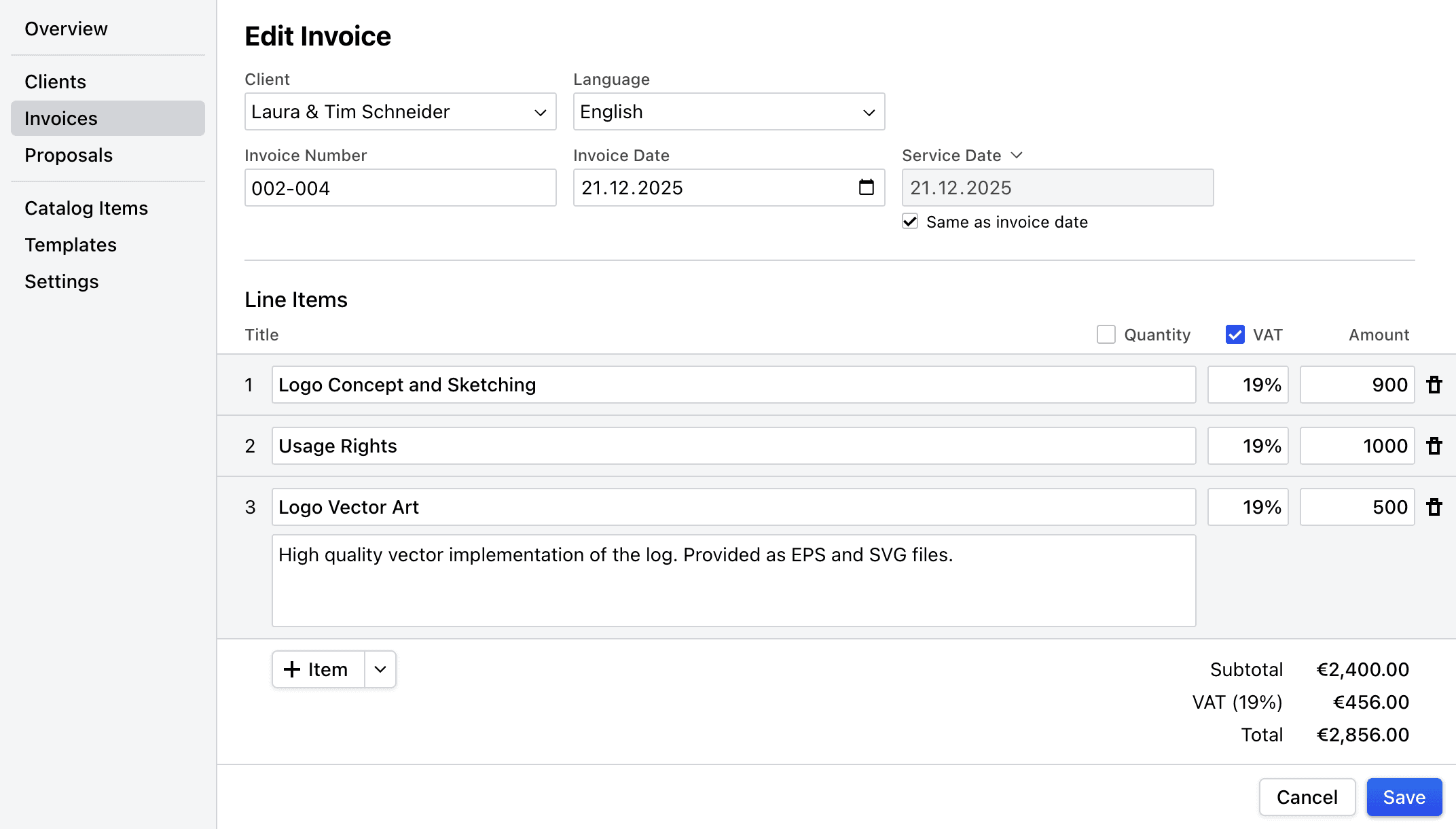
Cakedesk is a simple invoicing app for Windows and Mac. Choose DKK as the document currency, select the language your client expects, and create a professional invoice without adjusting symbols and formats by hand.
- Create invoices and proposals in DKK
- 3 invoices for free
- Keep your invoicing data locally on your computer
- No subscription, no recurring costs
Option 2: Create DKK invoice in your browser
If you only need one invoice in DKK, use Cakedesk's free online invoice generator. It works without an account: select DKK, enter the invoice details, and download the finished PDF.
#A brief history of the Danish krone
DKK was introduced in 1875 when Denmark joined the Scandinavian Monetary Union. After the union dissolved, the krone remained Denmark's currency. Today it is maintained with a stable peg to the euro.
#Where DKK is typically used
DKK is the official currency in:
- Denmark
- Greenland
- Faroe Islands (with locally issued króna at a 1:1 peg)
It is also used for:
- Government and public-sector contracts in Denmark
- Services for Danish tech, design, and shipping industries
- International agreements where Danish partners want local currency pricing
#Who typically accepts invoices in DKK?
Invoices in DKK are commonly accepted by:
- Businesses registered in Denmark or Greenland
- Danish public-sector clients
- Nordic companies that maintain DKK accounts
- International partners serving Danish customers
#When should you invoice in DKK?
Invoice in DKK when:
- Your client is based in Denmark or operates DKK accounts
- Contracts include Danish VAT or local compliance
- Pricing is set in krone to match budgets
- You want to avoid passing FX costs to Danish customers
Billing in DKK keeps invoices familiar for Danish accounting teams and reduces currency friction.